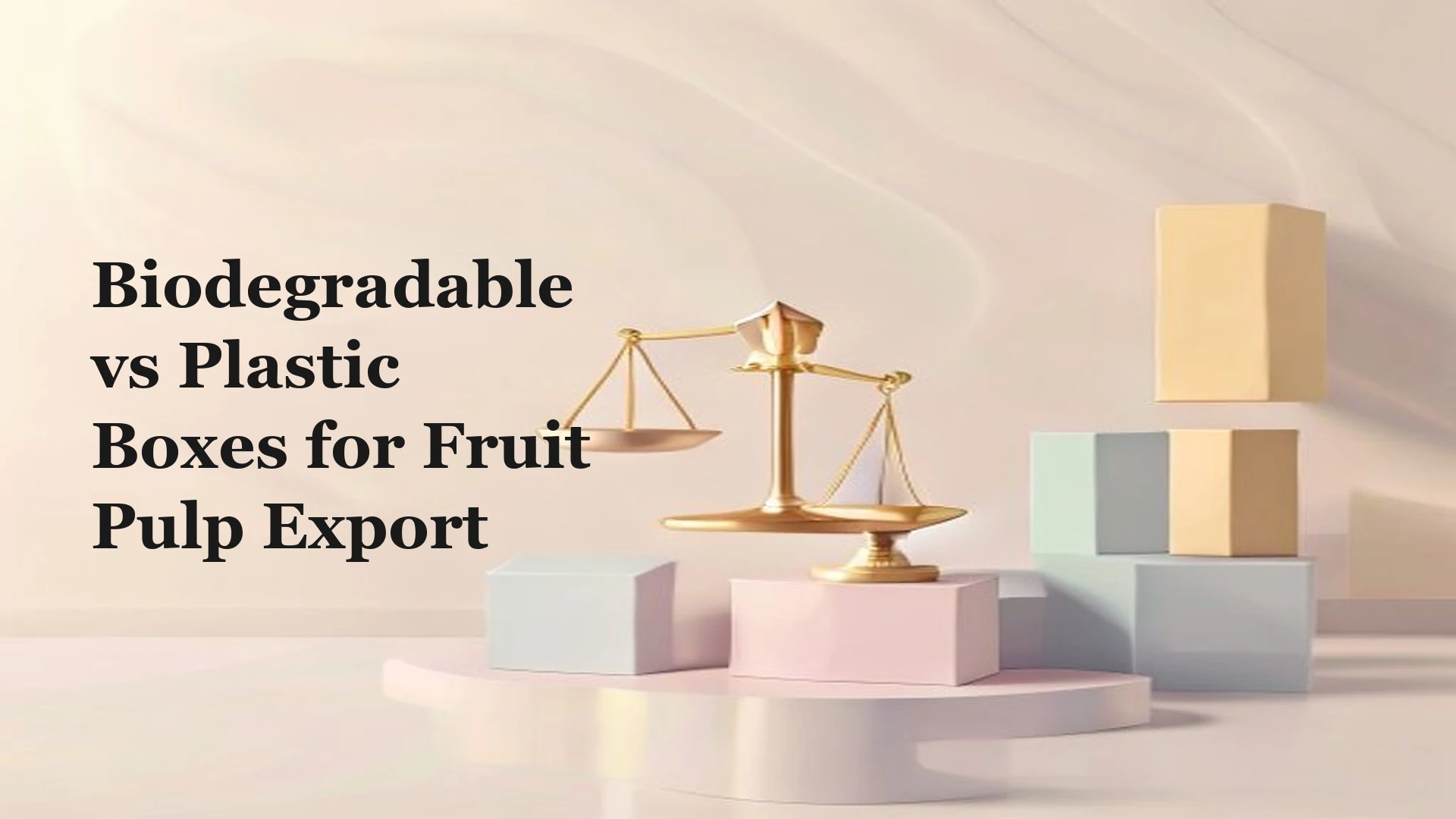
This article compares biodegradable and plastic boxes for fruit pulp export, focusing on environmental impact, cost, durability, regulatory compliance, moisture resistance, and buyer preferences for frozen or aseptic pulp shipments.
Environmental Impact of Box Materials
Biodegradable boxes for fruit pulp export are typically made from molded fiber, bagasse, or compostable bioplastics (PLA or PHA). These materials break down in industrial composting facilities within 90 to 180 days, reducing landfill waste by up to 70% compared to conventional plastic. In contrast, standard plastic boxes—often HDPE or polypropylene—persist for centuries, contributing to microplastic pollution. However, the carbon footprint of biodegradable production can be 20–30% higher due to agricultural inputs and processing. Exporters targeting sustainability-certified markets (e.g., EU Organic, B Corp) now prioritize biodegradable packaging, though end-of-life sorting remains a challenge for many destinations lacking composting infrastructure.
Cost Comparison for Export Shipments
Plastic boxes currently cost 15–25% less per unit than biodegradable alternatives. A standard 25 kg capacity polypropylene box sells for $2.50–$3.00, while a comparable biodegradable fiber box ranges from $3.50–$4.50. Bulk order discounts narrow this gap: purchasing 10,000+ biodegradable boxes reduces the premium to roughly 10%. Shipping weight also matters—biodegradable fiber boxes are 8–12% heavier than plastic, adding $0.08–$0.15 per kilogram in ocean freight. Over a full container load (e.g., 20 metric tons of pulp), the cost difference can exceed $800 per shipment, making plastic the default for price-sensitive buyers in Asia and the Middle East.
Durability During Cold Chain Transit
Frozen fruit pulp (typically stored at -18°C) requires boxes that withstand stacking loads of 500 kg or more without crushing. Plastic boxes excel here: polypropylene retains strength at subzero temperatures, offering 25% higher compression resistance than biodegradable fiber alternatives. Biodegradable boxes, especially wet-molded pulp, absorb moisture from condensation during cold chain fluctuations, leading to 5–10% higher failure rates in field trials. PLA-based boxes perform better in dry freezing but become brittle below -10°C. Exporters of high-value pulp (e.g., mango, passion fruit) often reject biodegradable boxes for long-haul shipments over 30 days due to risk of collapsed stacks and pulp leakage.
Regulatory Compliance Across Import Markets
The European Union’s Single-Use Plastics Directive (SUPD) exempts transport packaging from direct bans but imposes extended producer responsibility fees of €0.20–€0.50 per kilogram of non-degradable plastic. Japan and South Korea require recyclable or biodegradable packaging for fruit pulp imports under their Packaging Recycling Laws. Conversely, China and Vietnam have no specific mandates, allowing plastic boxes freely. For exporters diversifying into EU or North American markets, biodegradable packaging can reduce compliance costs by 12–18%, though each region defines “biodegradable” differently—EN 13432 in Europe vs. ASTM D6400 in the US. Failure to match certification risks fines or rejection at customs.
Moisture Resistance and Pulp Leakage
Fruit pulp has a high water activity (0.95–0.98), meaning even frozen boxes encounter condensation. Plastic boxes are inherently hydrophobic, preventing sorption and maintaining structural integrity for multiple reuse cycles. Biodegradable fiber boxes treated with biowax or biopolymer coatings achieve only 80–85% of the water repellency of virgin plastic, leading to a 5–7% incidence of leakage during thawing at destination. Exporters using biodegradable boxes often line them with compostable film (e.g., PBS or PBAT) to double moisture protection, adding $0.30 per box. For non-frozen aseptic pulp (ambient temperature), plastic boxes remain the standard because biodegradable materials soften under high humidity (>90% RH).
Disposal Options and Buyer Preferences
Final disposal patterns vary: plastic boxes are reused 4–6 times before recycling, whereas biodegradable boxes are single-use and composted. European buyers (retail chains, juice manufacturers) actively prefer biodegradable packaging due to zero-waste commitments, paying a 3–5% premium for certified compostable boxes. Asian and Middle Eastern buyers prioritize cost and reuse, with 70% requesting plastic boxes for returnable pallet systems. Data from 2023 trade shows shows a 12% year-over-year increase in requests for biodegradable boxes among premium fruit pulp exporters, but plastic still commands 78% of global market share for bulk frozen export.
Comparative Summary: Biodegradable vs Plastic Boxes
| Feature | Biodegradable Boxes | Plastic Boxes (HDPE/PP) |
|---|---|---|
| Material cost per unit | $3.50–$4.50 | $2.50–$3.00 |
| Weight per 25 kg box | 2.8–3.2 kg | 2.4–2.6 kg |
| Stacking strength at -18°C | 450 kg max | 580 kg max |
| Moisture absorption rate | 3–5% by weight | <0.1% |
| Reuse cycles possible | 1 | 4–6 |
| Composting time (industrial) | 90–180 days | N/A (landfill 400+ years) |
| Regulatory premium in EU | None (compliant) | €0.30–€0.50/kg fee |
| Buyer acceptance (global) | 22% | 78% |
| Suitability for >30 day cold transit | Moderate risk | High reliability |
Ready to Accelerate Your Digital Growth Strategy?
Partner with an industry-leading digital agency to upscale your infrastructure today.